EquitES project
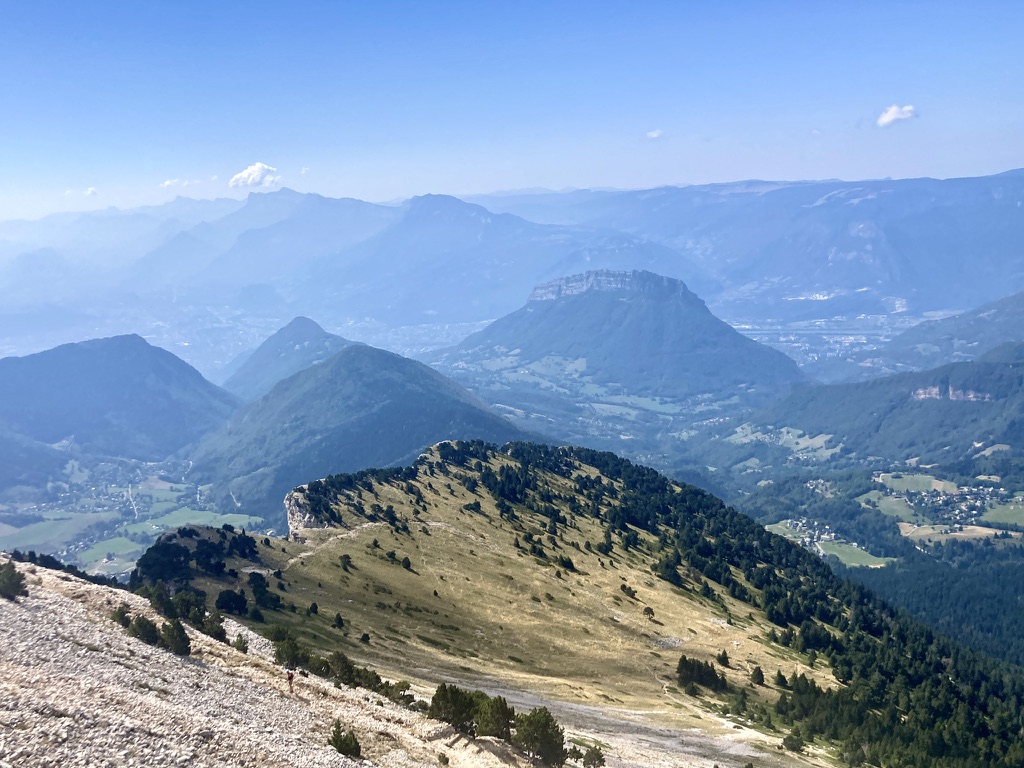
Ecosystems and biodiversity provide essential contributions to society - from food and timber production to clean air and water, climate regulation, recreation, and cultural value. These “nature’s contributions to people” (NCP) are fundamental to human well-being.
However, access to these benefits is not equal. It varies depending on where people live, their mobility, income, age, and other social factors. Climate change is intensifying these inequalities by altering ecosystems and their ability to provide these services.
The EquitES project, conducted in the greater Grenoble region, aims to better understand disparities in access to nature and how they affect quality of life.
Key Findings
Urban nature in Grenoble
Urban green spaces provide important benefits such as cooling during heatwaves, flood regulation, and recreation.
In the Grenoble metropolitan area, lower-income households generally experience less protection from climate risks, but have access to quality outdoor recreation spaces.
Some mismatches exist between where nature's contributions to people are available and where vulnerable populations need them most.
These findings highlight the need for urban planning that prioritizes equitable access to multiple nature benefits, not just increasing green space area.
Preprint available here.
Barriers to accessing nature
A public survey run in the study region in 2024 revealed that access to nature in the regions is overall high, but still limited by multiple barriers:
Physical: lack or poor quality of green spaces.
Social: lack of time, overcrowding, or safety concerns.
Knowledge & access: limited awareness of where NCP are provided.
Barriers differ depending on the type of nature's contributions to people (material, non-material, regulating).
In addition, barriers were not equally shared among respondents, with consequences on quality of life.
Fewer barriers are reported by men, rural residents, higher-income individuals, and people with good physical mobility.
Fewer barriers, together with higher nature connectedness, positively impacted respondents' quality of life.
Preprint available here.
Project Information
The EquitES project ran from October 2023 to November 2025 at the Alpine Ecology Laboratory and is funded by the European Union’s Horizon 2020 research and innovation programme (Marie Skłodowska-Curie grant No. 101104374).
For full methods, figures, and detailed results, visit the project pages (in french).